

The Last Christmas Tree
By Patricia Crisafulli
The axe hung on the wall of the workshop inside the barn, the varnish worn off the blond wood handle by years of working hands. Like everything in this place, it recalled their father, who had romanticized the country life, envisioning himself a farmer while the small machine shop that he’d owned supported the family. As children, they’d lived through their father’s experiments: chickens, sheep, even a few goats, and finally an apple orchard and a small cider press. Only the apple trees remained now, old and gnarled, producing more felled limbs than fruit these days.
Jake grasped the handle of the axe, surprised by the heft of it. Don’t swing it toward yourself. A dull blade is more dangerous than a sharp one. The litany of instructions echoed in his head, all in their father’s voice, and some place inside his rib cage tightened like a pulled muscle. He cleared his throat and headed toward the house, axe in hand.
Betsy, older by four years, exited the back door, pulling on her gloves. Jake took a good look at his sister: fifty-three, dark hair threaded with gray, face bare of makeup, lines deepening around her eyes, and wondered for the hundredth time that weekend what she would do now. When he’d asked her last night, she’d shrugged and said, “Same thing I do every day.” He supposed that meant she would keep living here, which was fine with him. He had no intention of uprooting his sister, who had lived there all her life: working in town as an accountant and taking care of their mother until her untimely death ten years ago and their father until he passed the previous spring.
He’d gladly sign over his share of the property to Betsy; security for her, guilt offering for him. He couldn’t speak for Dina, his younger sister, though he doubted she needed the money. Dina’s husband, John, though, kept looking around the place like an assessor. When he’d asked last night how much land was going for these days, Betsy had looked so stricken, Jake had wanted to throttle him.
“We need the whetstone?” Betsy called across the yard.
Jake brought his wandering thoughts back to the axe in his hand. Removing his Gore-Tex gloves, he thumbed the edge of the blade, a muscle memory movement he’d learned from his father as a boy. “Probably,” he called back to her.
Betsy disappeared back inside the mudroom in the rear of the house, while Jake waited outside, hoping the rest of them would get going soon. They were a gaggle of siblings and offspring: Dina and her family, he and his own two children. Divorce meant swapping holidays, and his kids would be with their mother this year. He was glad to have this weekend with them in mid-December, even though they’d had to miss a day of school to get here.
His daughter emerged first, short jacket flopping open, no hat, no gloves, phone glued to her palm. Sixteen, tall and slim like her mom, stubborn like him.
“You’re gonna freeze, you know,” Jake told her.
“Well, I didn’t bring anything else,” Jenn said. “I didn’t think we were going to be lumberjacks.”
Betsy came up behind her, a dark wool coat over her arm. “This is mine. It’ll fit you with room to spare. There are gloves in the pockets, too.”
To Jake’s shock, Jenn put it on without argument.
Greg, his fourteen-year-old son, stepped outside in a plaid wool jacket with a dark collar, too big in the shoulders and long in the sleeves. Dad’s old jacket, Jake realized, his throat tightening. Dina and her brood poured out of the house, all talking at once, and rescued him from his faltering words.
“How far is this? Should we drive?” John asked. “I only have sneakers, and I don’t want to ruin these.”
Jake hid a smile, knowing that John’s last walk had been on a California golf course.
“It’s a mile, more or less,” Betsy said. “And there’re plenty of boots inside.”
Jake tried not to listen as Dina wheedled her husband to “just put the damn boots on” and “do something with my family for once.”
John stomped off. The kids—his and Dina’s—clustered together around their phones. When John returned, wearing mudpacks that Jake swore had been his in high school, they set off, Betsy leading the way.
None of this was easy: being here together as adults who now lived in different parts of the country, cajoling their families into a nostalgic trip that had no deep relevance to their daily lives. They were here solely because Betsy, who never asked them for anything, had requested this visit before Christmas, all of them together. And now, Betsy had orchestrated this outing for all of them: cutting a tree from their woods, just as they had done as children.
One of Dina’s kids started to grumble about not buying a tree like everybody else or getting an artificial one. Jake suspected it was an attempt at getting attention from older cousins.
“Again?” Dina snapped. “I told you. We did this. Aunt Betsy, Uncle Jake and me. As kids. Every year. With your grandpa.”
Her staccato made him smile, memories of Dina’s talent for backtalk and punctuating the last word of any argument. He remembered her getting their father to apologize for not having better tires on the car when she drove too fast, went into a skid and crumpled the bumper.
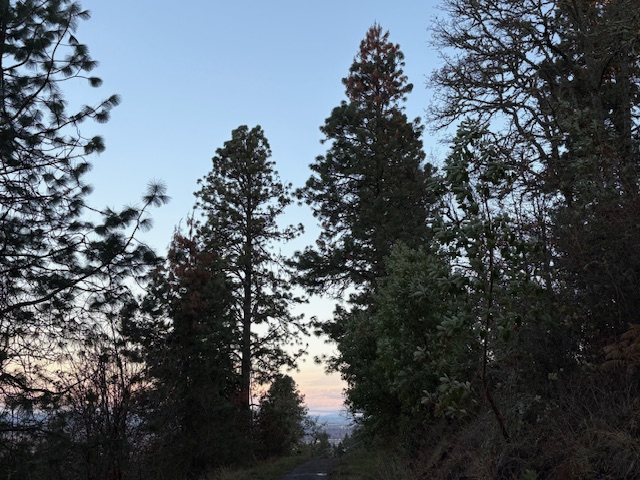
Heading toward the orchard and the woods behind, they fell in line along a track barely visible in the tall grass beaten down by autumn rains and the first light snow of the season. The farther they walked, the more easily Jake anticipated the rises and turns as if a map of this place had been etched on his mind and carved into his heart.

The land rose steadily and Jake leaned in to keep from losing traction. Dina scampered up beside him. “What’s your earliest memory of doing this?”
Jake tried to parse out the recollections spliced together like frames in an old film. “I can’t think of a Christmas when I didn’t come out here with Dad. But I remember the first time he let me take a few swings with the axe. I think I was six.”
“Six?” Greg called out. “That’s so crazy. No way you would’ve let us.”
Jake glanced back at his son and grinned, happy that he’d been listening instead of texting. “We were tougher stuff.”
He felt a tug on his arm as Dina slipped a mittened hand through the crook of his elbow. “I can remember riding on Dad’s shoulders because the snow was too deep out here. I must have been about four. I was so high up, seeing you and Betsy walking below me.”
Jake pressed his arm against his side, holding her hand fast against him. “Yeah, I remember. After we cut the tree, you rode on my shoulders halfway home.”
“What d’you do then? Dump me in the snow?” Dina smirked.
“No.” Jake shook his head. “That’s when you rode on Betsy’s shoulders.”
They followed the cloven hoofprints of deer and the four-pawed indentations of rabbits on the run. A flash of red caught their eye, and they glimpsed the fox before it disappeared into a thicket. Jenn, ever fast with her phone, snapped a photo—a tiny dot, but unmistakable.
John exhaled a plume of air, frosted in the falling temperatures. “This is the longest mile I’ve ever walked.”
Jake clapped him on the shoulder. “We lied. Probably more like two. The good news is any trees worth cutting will be right over there.”
They traipsed around a clearing, finding a tree that was full on one side, but a little scant on the other, perfect for putting up against the wall.
“Why don’t we leave it? Let it grow,” Jenn protested. “Honestly. It will just die and get thrown out.”
“There are a lot of trees here,” John began. “I don’t think one will be missed.”
Betsy walked up to Jenn and, to Jake’s surprise, put her arm around the girl. “I like how you think. I promise you, this is the last tree we’re gonna cut.”
Jake took the first few swings with the axe, taking a small chunk out of the bark. Three more swings, and he handed the axe over to Betsy.
Dina sidled up beside him. “Last tree? Really? Any idea?” she whispered through clenched teeth.
Jake shrugged. “Need to know basis.”
Two more swings from Betsy’s strong arm and they pushed the tree over. Grasping the trunk at one end and the top branches at the other, they hefted the tree and began the trek back home.
By evening, the tree stood in the usual place between the bookshelf and the recliner. The kids dug into the boxes, pulling out lopsided snowmen made from pinecones and pipe cleaners and a nativity set that was missing one of the wise men. Jake picked up a Christmas ornament, its red metallic coating scratched to a patina, encircled by tiny snowflakes missing most of their glitter. “Oh, I remember this one.”
“Mom’s favorite,” Betsy said. “There used to be two of them.” She gave Jake a knowing look, and he shrugged guiltily.
The small talk did little to distract Jake from Betsy’s earlier comment, but he knew better than to press his sister until she was good and ready to say anything. Before they left the next day, though, he’d have a word with her.
Jake stooped to gather up the empty cartons and John pitched in. Together, they carried them toward the attic hatch, where they climbed the folding stairs. As Jake descended, he caught the end of his daughter’s question: “What did you mean by the last tree?”
Jake headed to the living room where Jenn stood in the middle, wearing a strand of garland around her neck. The room stilled, waiting for Betsy’s reply.
Betsy rearranged a line of ceramic elves along a shelf. “After your grandfather died, I got a lot of inquiries about the land. Mostly people wanting to know if they could buy an acre to build. One developer wanted the whole thing.”
“And you never told anyone?” John piped up.
Betsy shook her head. “This belongs to all of us. Not just us three.” She circled her forefinger around the room. “The next generation, too. It’s not my place to make the decision, but I for one can’t stand the idea of this being carved up.”
“We don’t have to do anything,” Jake offered. “You can stay here as long as you like.”
Betsy met his eyes. “I’m not talking about myself—what I want, what I need. I’m talking about the land.” She drew in a breath. “I contacted a conservation group. There’s 41 acres here. They’re interested if we want to donate it. The land and woods will be managed, the wildlife protected. We can keep the house here for now, and I’m happy to buy you out of it.”
“I’ll give you my share,” Jake said, and Dina nodded.
“So, you’re going to give away the woods,” Jenn said. “I like that.”
When John started to speak, Jake braced for an argument. Instead, John’s question was far different. “Will they put up a plaque or something?” he asked. “You know, to honor your dad.”
Dina put her arm around her husband’s waist. “To mom and dad.”
“The Gregory and Marjorie Hunter Memorial Forest,” Betsy intoned. “I like the sound of that.”
Suddenly, Jake could see it: the small sign with tasteful lettering. There might even be a nature trail here one day, a place for people to come and walk in the woods, just as they had done since childhood.
“We forgot the star,” Betsy said, holding up the six-pointed tree topper.
Jake dragged over a stepstool and waved to Betsy with a flourish. “Your chariot, madame.”
He watched his sister as she climbed: the eldest of the three, the one who had lived there all her life, the caregiver and guardian. His tears brimmed as she set the star atop the tree—the last one, the best one they’d ever cut.