

The Boy Who Carried Bread
By Isabel Boeira
The years that Youssef, Amira, and their four children lived in Nahal Oz, in southern Israel, were times of relative peace. During that period, little Benjamin, whose parents lived on the same block, befriended the family. The boys between seven and ten years old played together, not caring about differences in religion or allegiance. Benjamin’s parents, Lavi and Raquel, saw no problem with it, nor did Youssef and Amira. They were just being children.
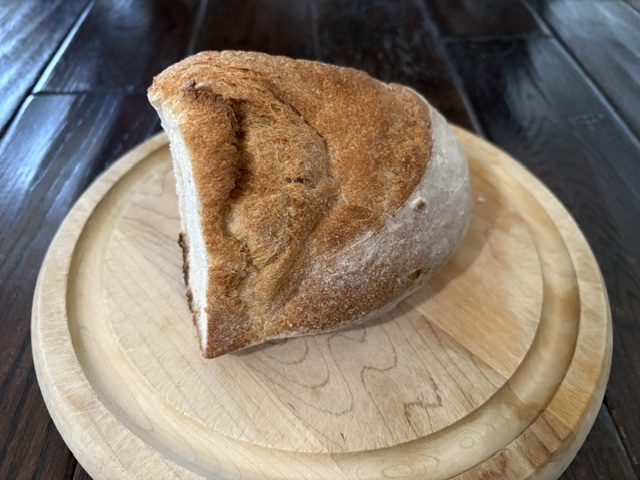
At the neighborhood school, the children waited for recess to gather on the sports court to play soccer. At home, they met in the street to run races and play hide and seek. When the boys came over for video games at Benjamin’s house, always filled with the scent of freshly baked bread, Raquel would offer them Challah bread with jam and pomegranate juice.
“Is there any more Challah?” Benjamin would always ask, his friends peering into the kitchen behind him, hopeful for one more piece.
The friendship between the boys extended to their parents as well, no matter that one family was Jewish and the other Muslim. They talked frequently, especially about the boys, the school they shared, and the street games they played together.
Then everything changed when Youssef and Amira decided to cross the Gaza border to visit relatives they hadn’t seen in years. Days after arriving in their homeland, a new clash between Israel and Hamas erupted. This time, however, with even more tragic overtones. During the action, the Palestinian couple, fearing for their children’s lives, hid them in the basement of the old house where they were staying.
“Omar, Jamal, Mourad, Habib—under no circumstances should you leave this place. Did you hear me?” Youssef ordered.
Amira, fighting tears, embraced her children, trying to comfort them. “Everything will be alright, my treasures. We will return soon to get you.”
The promise made, however, could not be fulfilled. Struck down by rifles while trying to transport three family members to their shelter, Youssef and Amira were fatally injured.
As the days passed and the fighting intensified, Benjamin felt increasingly worried about his friends’ delay in returning to Nahal Oz. “Dad, when are our neighbors coming home? I miss them…”
His father shook his head. “No news yet. But they will come back. You’ll see.”
The following night, Benjamin overheard a conversation between his mother and father. His eyes widened and filled with tears as he heard his father say Youssef and Amira were dead. “Oh, those poor children. They’re orphans. Where are they?” Raquel sobbed.
“Calm down, my dear,” Lavi whispered. “We can’t let Benjamin know about this. At least, not now. He’s too young for such suffering.”
A stifled sob tightened Benjamin’s throat. He tried to imagine where his friends were at that moment, wondering if they had escaped death.
“Do you think the boys are all right?” Raquel asked.
“All I know is they are hiding somewhere on the Gaza border. Let’s pray that the Lord protects them.”
The hours passed slowly that night. Unable to sleep, Benjamin tossed and turned in bed, and his thoughts raced toward his friends. “Wherever they are, I will do everything to find them,” the boy whispered, until he finally fell asleep.
A few days later, determined to discover the whereabouts of his companions, Benjamin found Raquel’s daily planner in the desk drawer and paged quickly through it. He remembered seeing Amira hand his mother a piece of paper before the trip. Perhaps it was the address of where they would be staying in Gaza. On the last pages, he found a blue Post-it note with the address he was looking for.
The boy ran to his room and searched the location on his cell phone. He saw that the place was just a few minutes from the border. That’s when he knew: he would cross the Gaza border, find his friends, and bring them back home. But how could he get there? He couldn’t possibly tell his parents; they could never know what he was planning.
Benjamin spent three days trying to figure it out, until he saw an armored humanitarian aid truck on the street. That gave him an idea. A week later, when the vehicle left a base near Nahal Oz at three o’clock in the morning, heading towards Gaza carrying food and medicine, Benjamin hid in the back of it.
When the truck stopped on the other side of the border, Benjamin saw that they were only a few meters from where the children were hiding. Slipping out of the back, he headed into the shadows. That’s when he saw the destruction: buildings hit by missiles, burned houses, and charred vehicles. But Benjamin told himself not to be afraid. Carefully, he ran through the rubble, toward the location where he knew his friends were hiding.
No shots were fired that night; perhaps because of a ceasefire. But when he reached his destination, all the boy found was an abandoned shell. He climbed through a shattered window and used the flashlight from his backpack. “Are you here?” he called out softly. “It’s Benjamin.”
There was no answer. The boy walked through the ransacked rooms, repeating the question. Suddenly, he heard knocking from the back of the property. He ran there and crouched down, putting his ear to the ceramic floor, trying to hear something. “It’s me, Benjamin! If you’re here, give me a sign!”
His eyes caught a small beam of light from the floor right in front of him. It was a trapdoor. His friends pushed and Benjamin pulled, and then the boys hugged each other with happiness and relief. Then their joy faded as Benjamin told them what they had already suspected: their parents were dead.
Benjamin noticed some empty biscuit bags and water bottles scattered on the dusty, dirty floor. He asked, “Are you hungry?”
Mourad, the oldest, nodded. “Our supplies ran out two days ago. We are starving.”
Opening his backpack, Benjamin took out five loaves of Challah bread and bottles of water. “Take them! I could only bring one loaf for each of us but eat mine. I’m not hungry.” The brothers looked at each other, then devoured the bread.
Benjamin brought out a bag of marbles from his pocket and the boys played for a while. Then, looking at his watch, he knew he had to get back to the truck. “Don’t worry,” he reassured his friends. “In two days, a new shipment will arrive. I will get in the truck again to come back to help you. Then we need to think of how to get you out of here.”
Jamal, the middle brother, looked at him with admiration. “Your courage saved us. You are the best friend of all!”
The children hugged each other and Benjamin left. Two days later, the boy repeated his risky mission. He was, however, more distressed, because he had heard from his father that they would leave for another city in just a few days, since remaining so close to the border had become reckless. More than ever, Benjamin knew he needed to rescue his friends and bring them home safely.
It was already dawn when the little boy left his house silently, without his parents awakening. He took his bicycle and rode toward the humanitarian base. Carefully, he climbed into the truck, which was already loaded with supplies. While he huddled among the boxes of food, clothes, and medicine, a soldier decided to check the shipment at the last minute. With his flashlight, he illuminated the interior of the vehicle.
Benjamin contorted his small body, trying to hide. His breathing tensed, and he trembled with fear of being discovered. The flashlight’s beam, for a fraction of a second, crossed his distressed face. He squeezed his eyes shut and whispered, “Lord, make me invisible.”
The soldier checked once more, then locked the doors of the armored vehicle. The little boy breathed a sigh of relief as the truck rumbled toward Gaza.
Back at the hideout, the young friends celebrated their reunion. Benjamin took bread from his backpack and some small bottles of orange juice and gave it all to the boys who consumed everything quickly.
Omar, the youngest of the brothers, cast a melancholy glance at Benjamin. “I’m still hungry.”
“How about a round of marbles? I bet I can beat you!” Benjamin said, hoping to distract them from their hunger.
Soon the boys were laughing and playing on the cracked basement floor under the dim light of a broken lamp. While they tried to have fun, Benjamin silently prayed, “Help me save my friends.”
When they tired of playing, he looked inside the backpack, even though he knew it had to be empty. If only he could give one more morsel to his friends. Reaching inside, his fingers touched something, and Benjamin pulled out one small loaf tucked in the corner. Looking upward, he murmured his thanks, then handed the loaf to Mourad who divided it among all of them, insisting that each have a share.
The hours passed quickly, and Benjamin only had ten minutes to return to the armored truck. “I need to go,” he said, grabbing his backpack. “I haven’t found a way to get you out of here yet, but I promise I will.” The friends gathered in a collective hug and said goodbye.
Sneaking along the edge of the narrow, crumbling streets, Benjamin ran to catch up with the humanitarian aid vehicle. While he was only a few meters away, the truck departed. Benjamin stretched his short legs in a desperate run, but it was useless. The armored vehicle left without him for Nahal Oz.
Frightened, he sought shelter behind a twisted concrete block. He thought about returning to the shelter but noticed the movement of pickup trucks with armed and hooded men near the residence. Benjamin remained hidden behind a broken cement wall for a few hours, until exhaustion made him fall asleep.
The sound of gunfire startled him, and a hand dragged him through the alleyway filled with rubble. A strong smell of smoke and gunpowder filled the air, which almost made the boy choke. A few meters away, he could see three fallen bodies lying amid rubble and debris. Benjamin breathed heavily, stunned and bewildered by the bloody and devastating sight.
“Let me go!” he pleaded, still trying to understand what was happening. “Please, let me go.”
Weeks later, his frail, small body was finally found and returned to Lavi and Raquel, who gave their beloved child a proper burial.
There was no solace for their loss, only the knowledge that his act of courage had helped save Omar, Jamal, Mourad, and Habib, who shortly after Benjamin’s death were rescued and sent to a shelter in Nahal Oz. In time, Raquel and Amira would try to see those boys to honor the friendship they had with Benjamin.
One thing they knew for sure. None of them would ever forget the boy who brought the bread.
Isabel Boeira is a Brazilian teacher and writer. She graduated with a degree in Languages from Unisinos (Brazil) and holds a Master’s Degree in Lusophone Studies from the University of Évora (Portugal). Isabel lives in Ripley, New York.